
The commercial space sector is undergoing a profound transformation. As the International Space Station (ISS) nears the end of its operational life, private companies are racing to establish continuous human presence and industrial activity in low Earth orbit (LEO). At the center of this shift is microgravity as the next commercial marketplace.
Dear Growth Investors,
What was once limited to government science experiments is rapidly becoming a commercial marketplace for advanced manufacturing, pharmaceuticals, materials science, and biotechnology.
Source: ISS National Laboratory
Two companies stand out: Voyager Technologies $VOYG (Leading partner and majority shareholder with 61.9% of the Starlab commercial space station) and Redwire Corporation $RDW. Both leverage deep ISS heritage and are positioning themselves as essential infrastructure and service providers for the post-ISS era.
DISCLAIMER: This article is for informational and educational purposes only and does not constitute financial or investment advice. I hold a position in Voyager at the time of writing. All data is sourced from publicly available filings, press releases, and market research. Past performance is not indicative of future results. Investing in stocks involves substantial risk of loss. DYOR!
What is Microgravity?
Gravity is the force that keeps us on the ground and holds planets in orbit. Many people think gravity disappears in space, but that’s not true. Even at the height where the International Space Station flies (about 250 miles above Earth), gravity is still nearly 90% as strong as it is on the surface.
So why do astronauts float? They are in a continuous state of free fall. The space station, the astronauts, and everything inside are all falling around Earth together at the same speed, about 17,500 miles per hour. Because everything falls at exactly the same rate, objects appear to float. You can call this condition microgravity (very tiny gravity), often nicknamed “zero gravity.”
Think of it like this: If you drop an apple on Earth, it falls straight down. On the space station, the apple also falls, but so does the astronaut and the station itself. They’re all falling around the planet instead of toward it, so the apple seems to hover in mid-air.
To take full advantage of microgravity, scientists and engineers rely on a set of specialized tools and systems.
Core enabling technologies include:
Specialized research facilities (gloveboxes, centrifuges, furnaces, incubators)
Additive manufacturing (3D printing of metals, polymers, and tissues)
Containerless processing (electromagnetic or acoustic levitation)
Crystal growth reactors for proteins and semiconductors
Advanced power, thermal control, robotics, and high-bandwidth communications
AI and digital twins for autonomous experiment management
Decades of ISS operations have validated these principles. The next generation of free-flying commercial stations will scale them from research to industrial production.
Use Cases
Microgravity offers unique advantages that simply cannot be matched on Earth. In the near-weightless environment, materials can form with far fewer defects, leading to higher-quality crystals, metals, and advanced alloys. At the same time, living cells, tissues, and organisms often behave differently than they do under normal gravity, revealing new biological insights. These discoveries and improved materials help drive faster innovation back on Earth, from better medicines and electronics to stronger industrial products.
Pharmaceuticals & Biotechnology
Superior protein crystallization for drug structure analysis
More physiologically relevant organoids and 3D tissue cultures
Improved regenerative medicine and bioprinting of tissues/organs
Better disease modeling and vaccine development
Materials Science & Advanced Manufacturing
High-performance optical fibers with lower signal loss
Superior III-V semiconductor crystals for electronics and photonics
Refined superalloys, ceramics, and metallic glasses
Improved thin-film deposition and nanomaterials
Other Applications
Plant growth and closed-loop life-support research
Combustion and fluid physics for cleaner energy systems
In-space construction of large structures
Specialty chemicals intended for return to Earth markets
Total Addressable Market (TAM)
Key projections (as of 2026):
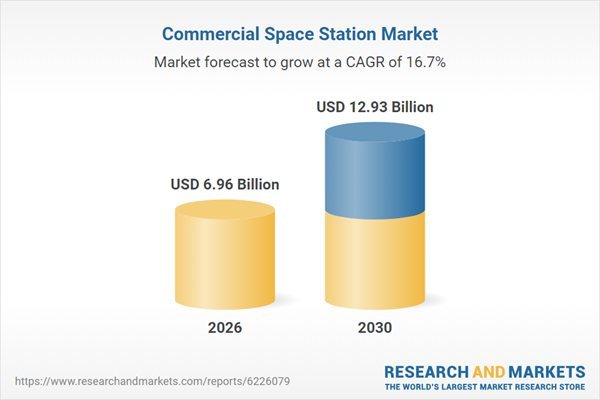
Commercial space station market: from $6.96 billion in 2026 to $12.93 billion in 2030 at a compound annual growth rate (CAGR) of 16.7%.
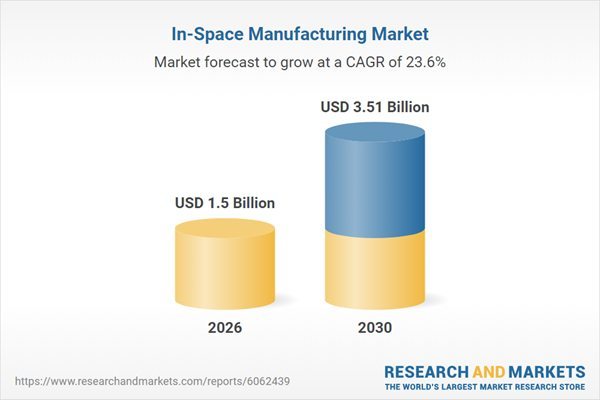
In-space manufacturing: from $1.5 billion in 2026 to $3.51 billion in 2030 at a compound annual growth rate (CAGR) of 23.6%.
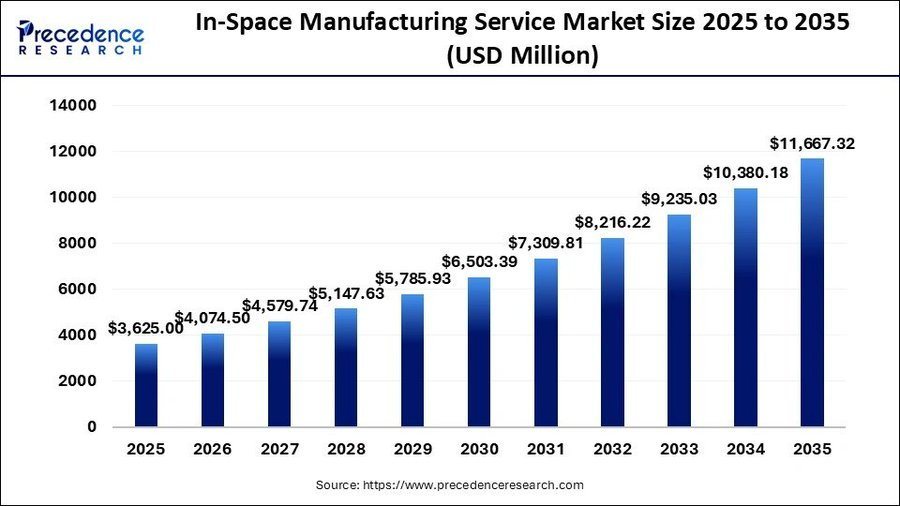
In-space manufacturing services: from $4 billion in 2026 to $12 billion by 2030 at a compound annual growth rate (CAGR) of 12%.
The low Earth orbit (LEO) pharmaceutical market is estimated to reach roughly €30 billion, driven by companies utilizing microgravity for advanced drug crystallization and biomanufacturing.
That's where Voyager and Redwire are coming in...
1. Voyager Technologies and Starlab

Voyager Technologies operates three segments: Defense & National Security, Space Solutions, and Starlab Space Stations. The company leverages over 35 years of spaceflight heritage and more than 2,000 successful missions through its consolidated family of acquired aerospace companies, such as ZIN Technologies and Space Micro.
Starlab Overview
Starlab is a commercial space station project planned for low Earth orbit. It is scheduled to launch around 2029 to provide a research lab and workspace in space after the International Space Station (ISS) retires. Starlab is a single large rigid module (~17 m tall × 7.7 m wide) designed to launch fully outfitted on one SpaceX Starship flight.
Key capabilities:
Continuous crew of 4 (8 during handover)
13 internal payload platforms (130 mid-deck locker equivalents)
External payload platforms + MDA SKYMAKER robotic arm
Bishop science airlock
AI-enabled operations (Palantir digital twins)
Three docking ports
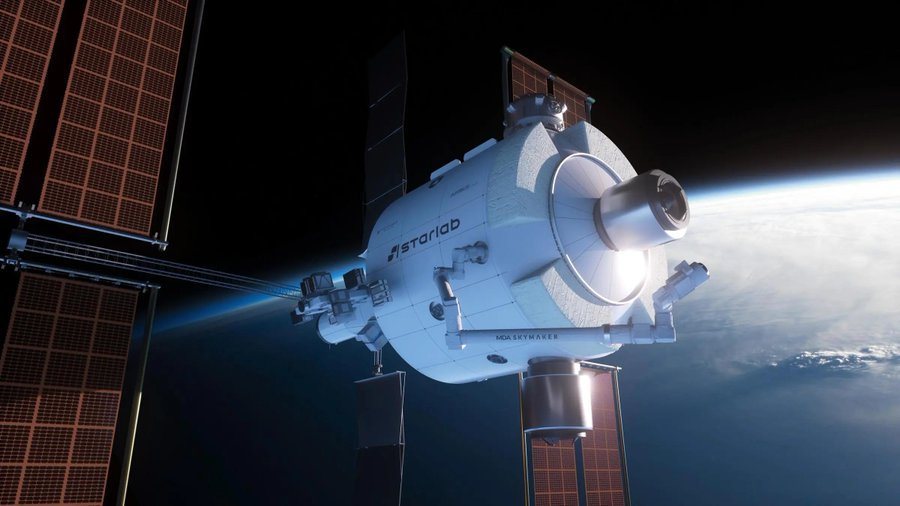
Source: NASA
Major Partners
Airbus (design, European heritage, planned European subsidiary)
Mitsubishi Corporation (equity partner)
MDA Space (robotics & equity partner)
Palantir Technologies (AI & data systems)
Hilton & Journey (crew hospitality design)
Northrop Grumman (docking & cargo services)
The Ohio State University (academic & AgTech outreach)
NASA Support
NASA has provided more than $217 million through a funded Space Act Agreement under the Commercial Destinations Free Flyer / Commercial LEO Destinations program. This includes an initial ~$160 million award (2021, originally to Nanoracks, later under Voyager) plus an additional $57.5 million (announced early 2024) tied to further milestones, including development work related to Cygnus docking upgrades and other station progress.
After the successful Commercial Critical Design Review (CCDR) in February 2026 (NASA SAA milestone 28), Starlab has transitioned from design validation into full fabrication, testing, assembly, and systems integration.
Near-Term Focus (2026 onward)
Primary structure manufacturing: Vivace Corporation is fabricating the large aluminum primary structure (one of the largest single spaceflight structures planned) at its New Orleans facility, with support from NASA’s Michoud Assembly Facility. Initial test structures began around late 2025, and full flight hardware production is now underway.
Systems integration and testing, including avionics, computing, software, sensors, life-support technologies (such as the Advanced Urine Processor), and other subsystems.
Continued use of the high-fidelity full-scale mockup at NASA’s Johnson Space Center for human-in-the-loop testing, interior evaluation, astronaut training development, and systems work.
Additional NASA Space Act Agreement milestones beyond the CCDR as fabrication and integration progress.
Ongoing technology demonstration activities (earlier announced demos include an alternative urine processor and free-space optical communications link concepts).
Broader Path to Operations
Launch target: Single-launch deployment on SpaceX Starship, generally targeted for 2028 to 2029 (commonly referenced as 2029 in recent materials), with the station arriving fully outfitted and ready for operations, no multi-launch on-orbit assembly required. This timeline is intended to support continuity of human presence and research ahead of ISS retirement.
Payload and customer activity: Continued commercial reservations and partnerships (e.g., research, manufacturing such as semiconductors and biotech like LambdaVision), with reports of strong demand.
Parallel NASA Commercial LEO Destinations (CLD) Phase 2 activity: Draft/final RFP processes expected in mid-to-late 2026 (proposals around October 2026, potential awards in spring 2027), which could provide additional government support or services contracts for providers like Starlab.
Back to Starlab’s commercial payload capacity
Starlab’s commercial payload capacity is fully reserved, more than three years before planned launch.
Notable reservations include:
Yuri (German space biotech), dedicated capacity for the entire first year of operations
LambdaVision, protein-based artificial retina manufacturing scale-up
United Semiconductors, commercial-scale III-V semiconductor crystal growth
Space Scotland
Center for Space and Aviation Switzerland & Liechtenstein
Space LiinTech (AI-driven pharmaceutical research)
Formal agreement with Germany’s DLR
These early bookings provide strong revenue visibility and validate demand for sustained microgravity access.
2. Redwire Corporation

Redwire is a pure-play space infrastructure leader with more than two decades of ISS operations and hundreds of flown experiments. It specializes in the hardware and processes that turn microgravity into commercial products.
Core Microgravity Platforms:
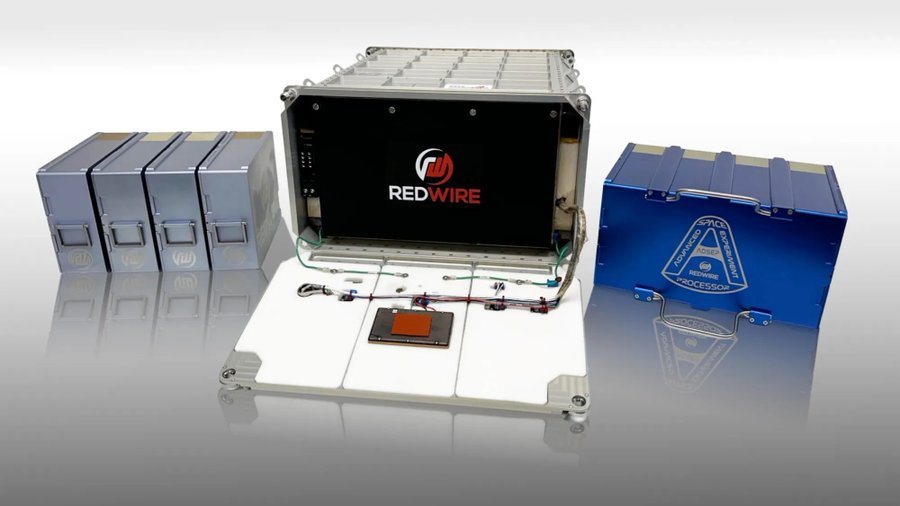
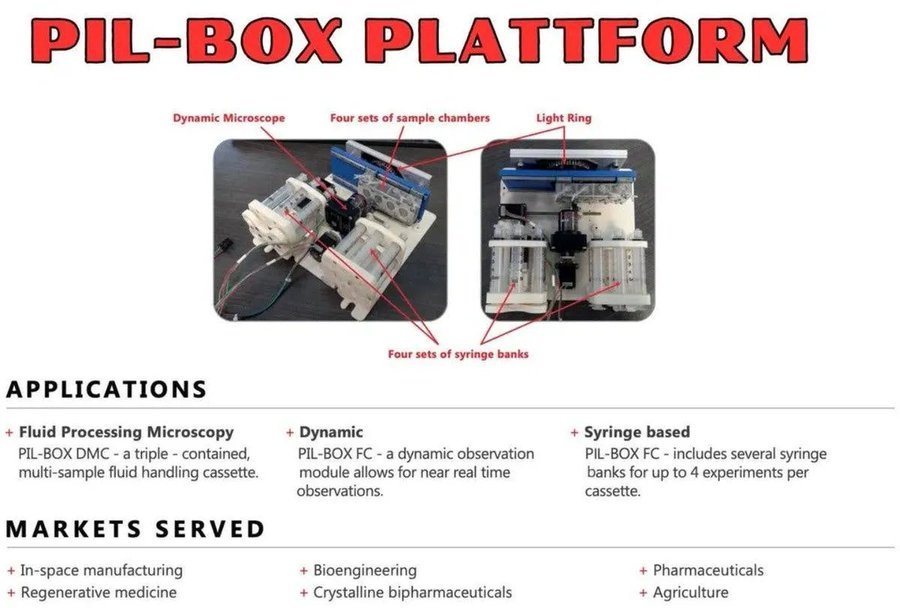
PIL-BOX (Pharmaceutical In-space Laboratory), crystal growth of proteins and small molecules
High-volume Industrial Crystallizer (up to 200× previous sample volume)
3D BioFabrication Facility (tissue bioprinting)
Additive Manufacturing Facility
Industrial Crystal Facility, Ceramics Manufacturing Module
Multi-use Variable-gravity Platform
Optical fiber production systems
PIL-BOX Platform and Protein Crystallization
Source: Redwire
The PIL-BOX platform is also a key component of the product portfolio. This technology has significant implications for:
Pharmaceutical development: Enables the development of more effective drugs by allowing proteins to form larger, more ordered crystals than is possible on Earth.
Biotechnological advances: Supports research that can lead to breakthroughs in understanding diseases and developing new treatments.
By leveraging the unique conditions of space, Redwire is gaining a competitive advantage in the emerging field of space-based biotechnology research. The most exciting aspect of the business is protein crystals: Protein crystals are required for the production of numerous drugs and can only be produced in microgravity.
Again, here comes in Starlab...
...designed to use the special conditions of zero gravity (microgravity) for research and making advanced materials.
In space:
Proteins and crystals grow bigger and cleaner.
Cells form more natural shapes.
Materials form with fewer defects.
This can lead to better medicines and stronger, more powerful materials for electronics, computers, and planes.
What Starlab offers:
Continuous human crews so experiments can run without stopping.
Special labs for biology and medicine (cancer, aging, rare diseases).
Tools to grow pure crystals and advanced materials that are hard to make on Earth.
AI systems that watch experiments in real time and help improve results.
Voyager’s VISTA program also helps companies turn these space discoveries into real products on Earth.
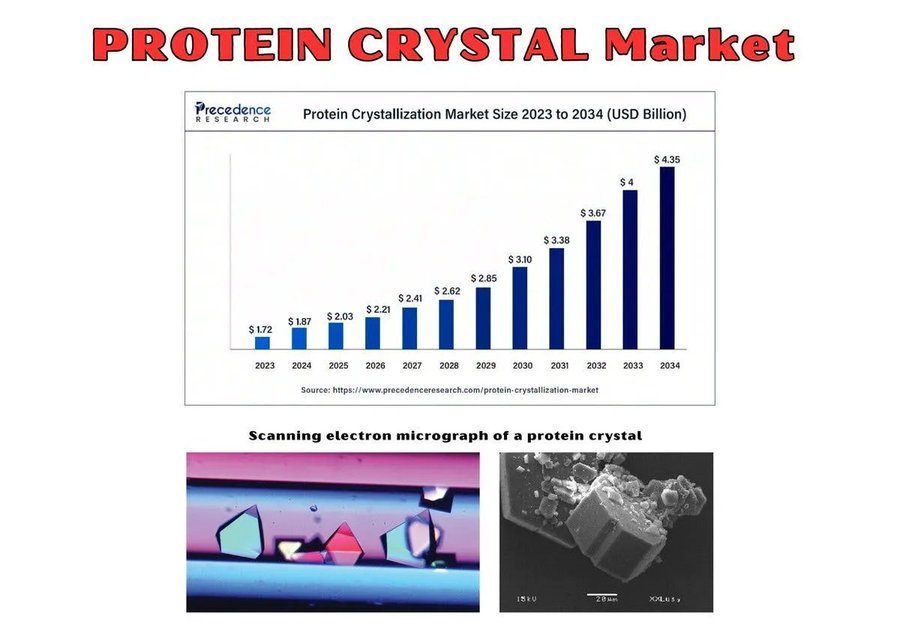
The global protein crystallization market was valued at USD 1.87 billion in 2024 and is expected to reach USD 4.35 billion by 2034, growing at a compound annual growth rate (CAGR) of 8.8% between 2024 and 2034.
That's why Redwire is collaborating with Eli Lilly, Bristol Myers Squibb, and ExesaLibero Pharma to conduct critical experiments using the space-based PIL-BOX platform to develop advanced therapies for diabetes, cardiovascular disease, and pain.
Redwire has also been awarded a NASA contract for four additional drug studies in its innovative space laboratory (PIL-BOX). NASA's goal is to produce high-quality protein crystals for vaccines. Redwire also announced that it is conducting cancer drug research using its PIL-BOX platform on the ISS. Building on the success of its PIL-BOX platform, the company is continuing to expand its space-based drug development program.
SpaceMD
To further commercialize the PIL-BOX platform and protein crystallization, Redwire is establishing a new venture company. The new company, SpaceMD, will focus on growing seed crystals in orbit for use on Earth to produce new and reformulated drugs.
SpaceMD will leverage the unique microgravity of space and employ Redwire's innovative and flight-proven Pharmaceutical In-Space Laboratory (PIL-BOX) technology to grow the seed crystals. Twenty-eight PIL-BOX systems have already been deployed in space and successfully crystallized 17 compounds on the ISS, including insulin and other key molecules. SpaceMD will sell or license these seed crystals to companies that can use them to produce reformulated versions of existing drugs or entirely new therapeutics. As part of this launch, SpaceMD announced a licensing agreement with ExesaLibero Pharma, which is developing drugs to treat bone diseases.
Under the agreement, ExesaLibero Pharma will collaborate with SpaceMD to further develop and improve its drug ELP-004 via the PIL-BOX system. This drug could hold the key for ExesaLibero Pharma to alleviate insidious bone erosion caused by numerous diseases such as rheumatoid arthritis, multiple myeloma, diabetes, periodontitis, and tuberculosis.

Key Developments & Partnerships (up to mid-2026)
Launched SpaceMD subsidiary (2025) to commercialize seed-crystal production and IP
Royalty agreement with ExesaLibero Pharma for ELP-004 (bone-disease candidate)
Multiple flights with Eli Lilly, Bristol Myers Squibb, Butler University, and others
$25 million NASA IDIQ contract (2025) for biotechnology facilities and ISS operations support
Research payload lockers for Virgin Galactic Delta-class spaceships
Biotech & manufacturing systems for Sierra Space LIFE habitats
Collaboration with Boryung (Korea) on human-health investigations
ESA instrument development for materials and fluid physics
New microgravity payload development facility opened in Indiana (2026)
Roll-Out Solar Arrays for Axiom Space modules and docking systems for lunar Gateway
Redwire is transitioning from pure research services toward royalty-bearing manufacturing and value-chain participation in high-margin terrestrial markets.
Outlook
Microgravity is transitioning from a pure scientific research environment to a commercially viable industrial input.
Voyager with Starlab is developing the primary commercial destination platform, while Redwire is providing the critical process equipment, infrastructure, and manufacturing technologies required to convert microgravity conditions into productive capacity.
Evidence of accelerating demand is already visible: multi-year commercial payload bookings secured well ahead of launch, alongside the formation of dedicated pharmaceutical subsidiaries focused on microgravity-enabled applications such as protein crystallization and advanced drug formulation. These developments indicate that end-market interest is materializing more rapidly than previously anticipated.
Key challenges remain, including elevated cost structures, schedule execution risk, and residual technical uncertainties. However, several structural tailwinds are reinforcing the investment case: continued declines in launch costs, validated physical principles for multiple applications, sustained government demand as an anchor customer, and growing private-capital inflows. Together, these factors are establishing a self-reinforcing commercial cycle.
Over the next decade, value capture is expected to concentrate among companies that combine reliable access to microgravity platforms with proprietary, proven process intellectual property. The current acceleration in microgravity-related projects represents one of the most tangible near-term pathways from space exploration to industrial monetization.
Sources: